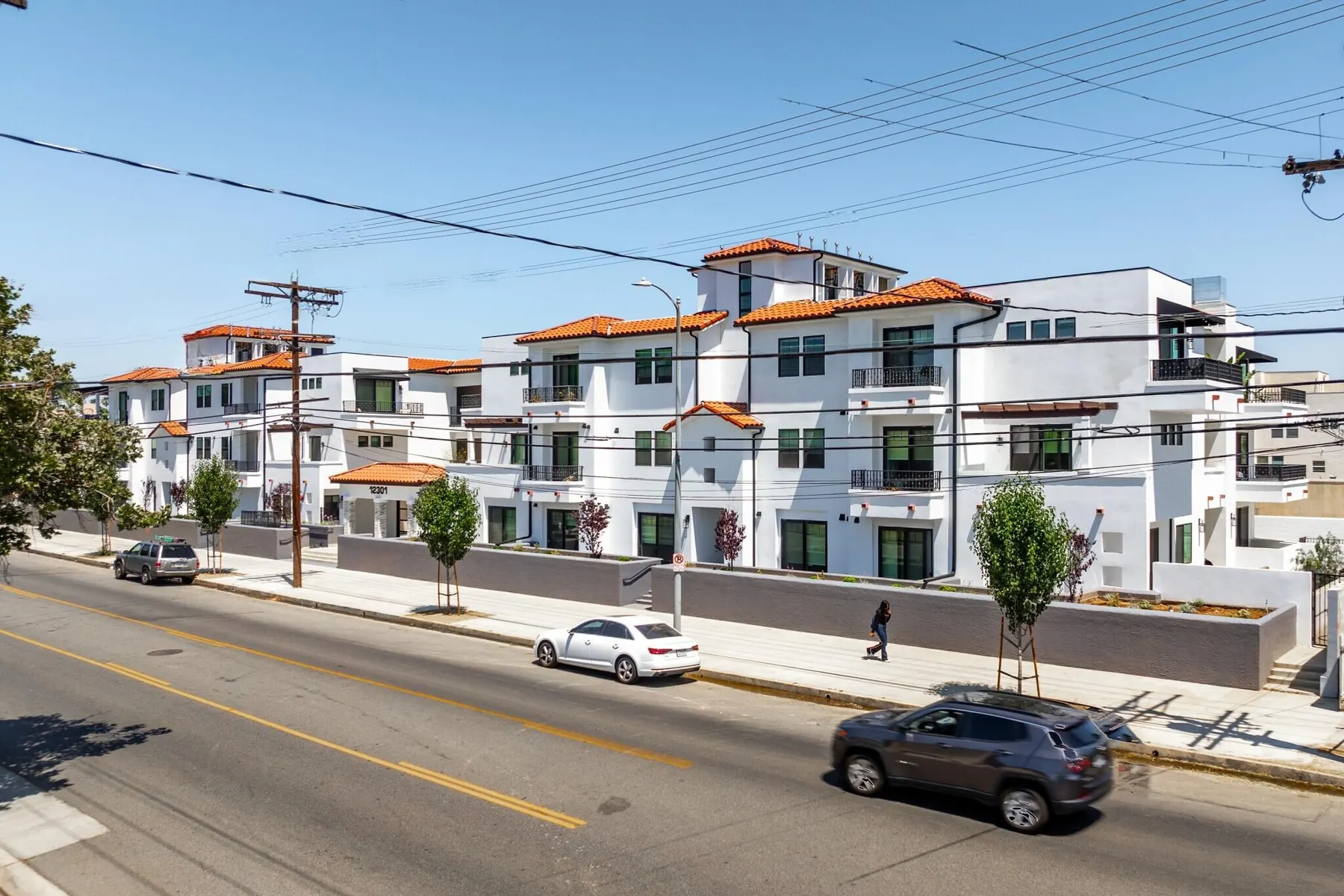
Sequencing the outside of the house
Exterior work goes in a particular order. Roofing and gutters usually come first, then windows and doors, then the wall finish, with paint last, because each layer laps over the one before it to shed water. When different contractors handle these pieces years apart, the flashing between them is where leaks start, so we plan the whole envelope even if you build it in phases.
We begin by looking for what is already failing: cracked or bulging stucco, soft trim, staining below window corners, and roof valleys or penetrations that have leaked. Fixing the cause before new finishes go on keeps a fresh exterior from showing the same problems a few seasons later.
Windows and doors
Replacing windows or doors with the same size and type is on the LADBS list of express permits, which are issued without plan check. For residential buildings three stories or less, replacement units must be dual glazed and labeled and certified by the National Fenestration Rating Council under the state energy code. Changing the size or type of an opening falls outside that express permit, and a new header is often part of the work.
Windows are also a common point where an exterior remodel meets a neighborhood rule. All exterior work in a Historic Preservation Overlay Zone is subject to added review under the district's preservation plan, and City Planning's matrix for the Mulholland Scenic Parkway Specific Plan calls for non-glare or low-reflective glass. We check for these before anything is ordered.
Stucco, siding and the wall assembly
LADBS also lists re-stucco on residential buildings as an express permit, along with replacing existing siding with new stucco on a single-family home or duplex. New vinyl, wood or fiber cement siding qualifies when it goes over solid sheathing with an approved water-resistive barrier, follows a valid ICC evaluation report, and sits on exterior walls at least 5 feet from property lines.
Under the finish, the water-resistive barrier, weep screed and window flashing do most of the work. Older houses sometimes have stucco applied over aging paper with no reliable path for water to drain, and a re-stucco is the moment to correct it. Where only part of the house is being redone, we match the existing texture; when you want a new look, we change the finish across the whole elevation.
Roofing and the cool roof rule
Re-roofing with a Class A or B covering weighing less than 6 pounds per square foot is another express permit item. When more than half of a home's roof area is replaced, LADBS requires a cool roof product labeled and certified by the Cool Roof Rating Council. Under the cool roof ordinance the city adopted in 2021, repairs, replacements of half the roof or less, and replacements where a solar system is being installed are exempt, and lifting existing tiles to lay new underlayment before resetting them does not trigger cool roof compliance.
In a Very High Fire Hazard Severity Zone the covering must be Class A, and the city's 2026 fire zone checklist adds that a roof replaced, or with half or more replaced within 12 months, must meet the roofing rules for new construction. Wood shake and wood shingle roofs, including fire-retardant-treated ones, are not permitted in fire hazard zones. We coordinate the roofer's work with gutters, solar, skylights and any new windows so the details tie together.
Fire zone upgrades for walls, vents and doors
If the house sits in a Very High or High Fire Hazard Severity Zone, LADBS applies the California Wildland-Urban Interface Code to alterations, so exterior work is a chance to harden the house. The code calls for ember-resistant vents, noncombustible gutters with a way to keep leaves out, exterior wall coverings that are noncombustible, ignition resistant or fire-retardant-treated, multilayered glazing with at least one tempered pane or another listed option, and garage doors sealed so gaps stay at 1/8 inch or less. We check the current state and local maps for your address before choosing materials.
Paint, lead safety and the view from the street
Many Los Angeles houses were painted long before 1978. Under the EPA Renovation, Repair and Painting Rule, contractors paid to disturb more than small amounts of paint in homes built before 1978 generally must be certified and use lead-safe work practices, which affects how we prepare, contain and clean up during scraping and sanding. We build that into the schedule from the start.
Curb appeal also involves the front yard. On single-family lots, the zoning code limits driveways to no more than half of a required front yard and expects the rest, apart from walkways, to be planted rather than paved, and front yard fences are generally limited to 3 1/2 feet. We design new walkways, entry steps, lighting and fencing within those limits.